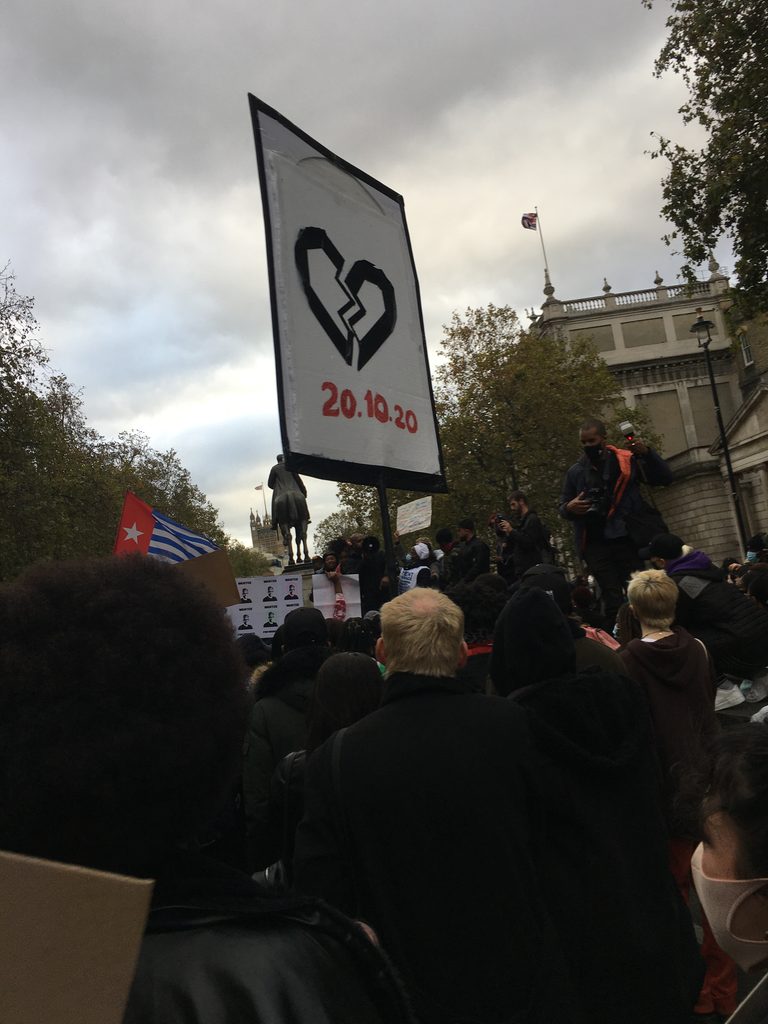
On October 20, 2020, something broke between Nigeria’s youth and the state.
The EndSARS movement had begun weeks prior as a protest against police brutality, particularly the abuses associated with the Special Anti-Robbery Squad division. But it quickly became bigger than SARS. Across Nigeria and globally, young people took to the streets and social media, demanding accountability and a government that would listen.
For a brief moment, it felt possible, and momentum had been established.
Social media became an organising tool for action rather than simply a place to complain. Videos, community and hashtags gave people a common language. A generation often accused of being politically apathetic had demonstrated that it could organise itself at extraordinary speed.
Then came October 20.
At Lekki Toll Gate, soldiers opened unecessary fire on protesters. The exact number of people killed remains contested, but Amnesty International documented multiple deaths and injuries; the events of that night became a defining trauma of the movement.
And for many, the deepest wound was what followed.
SARS was dissolved. There were promises of police reform and accountability. But dissolving a police unit did not erase the culture that had allowed abuses to happen in the first place. Investigations and panels followed, yet questions about justice for victims and accountability for security forces remained.
That is where Nigeria failed its young people.
The failure was that citizens had to take to the streets before their experiences were treated seriously and that even after those protests, accountability remained painfully difficult to achieve.
The movement didn’t disappear. It simply changed.
Today, the #EndSARS may not dominate social media as it did at the peak of it occurring, but its legacy is still visible.
It changed how a generation thinks about protest and political participation. It showed that young Nigerians could build networks outside traditional political structures and demonstrated the power of the internet.
But there is a danger in turning every crisis into content.
Humour can help people survive frightening realities. Yet when violence becomes familiar enough to become a meme, it can also become easier to ignore. What begins as a way of coping can gradually become desensitisation.
That is why keeping the spirit of End SARS alive cannot simply mean posting an old photograph every October 20.
Remembering matters. But remembrance alone is not accountability.
So what does keeping the momentum actually mean?
It means moving beyond moments of outrage.
It means documenting abuses even when they are no longer trending. Supporting journalists, lawyers and organisations that investigate them. Following government promises long after the press conferences have ended and the memes have ended. Preserving the stories of victims and families so that institutional memory does not disappear.
And it means recognising that political participation is not limited to protest.
The most powerful legacy of End SARS may have been the infrastructure people created when formal institutions failed them: emergency funds, medical networks, legal assistance, independent information channels and communities of support.
Those networks can exist outside a crisis too.
Because the real question is not whether #EndSARS is still trending.
It is whether the generation that shouted Soro Soke (speak up) is still willing to speak when there is no hashtag or trending injustice to carry them.
October 20 should remain a day of remembrance. But it should also be a reminder that movements cannot survive on memory alone.
If Nigeria’s young people want to keep the momentum for change alive, the next phase cannot only be about making noise.
It has to be about building something that cannot be ignored when the noise dies down.